Sorry, you need to enable JavaScript to visit this website.
Amrit Kaal Vision Amrit Kaal Vision
Indian Insights Indian Insights
Budget FY26-27 Updates Budget FY26-27 Updates
Amrit Kaal Vision

Amrit Kaal, a term coined by Hon’ble Prime Minister Shri Narendra Modi, refers to India’s transformative journey from 2022 to 2047, the centenary year of Independence. Guided by the vision of Viksit Bharat @ 2047 and the principles of AatmaNirbhar Bharat (Self-Reliant India),  The vision focuses on India as a developed nation by 2047 through inclusive, sustainable and technology-driven growth.

$30 Tn
$18,000
$6 Tn
1.1+ Bn
Economy
Per Capital Income
Exports (~10% of global exports)
Working-age population, ~largest & youngest population across top economies
$30 Tn
Economy
$18,000
Per Capital Income
$6 Tn
Exports (~10% of global exports)
1.1+ Bn
Working-age population, ~largest & youngest population across top economies
Indian Insights

Explore India's dynamic economic landscape, where innovation, entrepreneurship, demographic strength and policy-driven growth converge to create one of the world's most compelling investment destinations. 

7.4%
$4.15Tn
$12,801
$2813
India's estimated GDP growth in FY26
GDP
GDP p​er capita PPP
Per Capita Income
7.4%
India's estimated GDP growth in FY26
$4.15Tn
GDP
$12,801
GDP p​er capita PPP
$2813
Per Capita Income
Budget FY26-27 Updates

The Union Budget 2026–27, presented by Finance Minister Nirmala Sitharaman, focuses on sustaining economic growth and fiscal discipline amid global uncertainty. Anchored in the vision of Viksit Bharat and aspirations of Yuva Shakti, the Budget prioritizes manufacturing, infrastructure, innovation, job creation and ease of doing business. It aims to strengthen India's competitiveness and position the country as a leading global investment destination.

₹12.2 Lakh Crore
₹ 40,000 crore
INR 20,000 crore
₹5000 crore
7
Public capital expenditure allocation for FY 2026–27.
The proposed outlay for the Electronics Components
Allocated over five years for Carbon Capture, Utilisation and Storage
Per City Economic Region allocation over five years, focusing on Tier II
High-Speed Rail Corridors announced as new growth connectors
₹12.2 Lakh Crore
Public capital expenditure allocation for FY 2026–27.
₹ 40,000 crore
The proposed outlay for the Electronics Components
INR 20,000 crore
Allocated over five years for Carbon Capture, Utilisation and Storage
₹5000 crore
Per City Economic Region allocation over five years, focusing on Tier II
7
High-Speed Rail Corridors announced as new growth connectors
transforming
indian sectors
Infrastructure
Green Energy
EV/Auto
Pharmaceuticals
ESDM
Food Processing
Chemicals
Textiles
The Crucial Role of Infrastructure
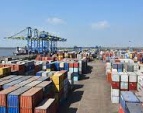
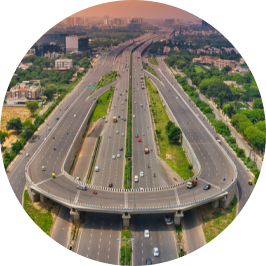
Infrastructure remains a cornerstone of India's growth story, enabling seamless connectivity, enhancing productivity and supporting long-term economic expansion. Through transformative initiatives such as PM Gati Shakti, the National Monetisation Pipeline and large-scale public capital investments, India is building world-class infrastructure across transportation, logistics, energy, digital networks and urban development. These efforts are strengthening supply chains, improving ease of doing business, and creating new opportunities for domestic and global investors.
$1.7 Tn
Infrastructure Investment Requirement by 2030
US$117 Bn
Asset Monetisation Plan (2025–30) to Fund New Infrastructure Creation
₹1.5 Lakh Crore
(US$17.5+ Bn Interest-Free Loans to States for Capital Expenditure in FY26
Green Energy
India is the world's 3rd-largest energy consumer and one of the fastest-growing clean energy markets. As of Q1 2026, India has achieved 283.46 GW of installed non-fossil fuel capacity, accounting for more than 50% of total installed power capacity, achieving 50% of its 2030 target five years ahead of schedule.
500GW
India’s non-fossil fuel energy capacity by 2030
45%
Reduction in GDP emission intensity by 2030 from 2005 levels
3rd
Globally in Annual Solar Capacity Additions in 2025
Electric Vehicle / Automobile
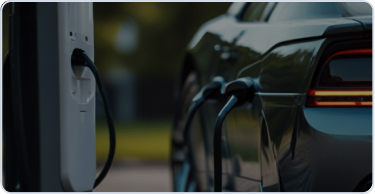
India is the world's 4th-largest automobile market and one of the fastest-growing EV ecosystems globally. Government initiatives such as PM E-DRIVE, Auto PLI, ACC Battery PLI, and Make in India are accelerating EV adoption, domestic manufacturing, battery production and charging infrastructure development.
US$191 Billion
Projected size of India's EV market by 2034, growing at a CAGR of 54.9% from 2026–2034.
By 2030
India targets 30% of private cars, 70% of commercial vehicles, 40% of buses, and 80% of two- and three-wheelers to be electric.
2.9 Million
Units Passenger vehicles, three-wheelers, two-wheelers and quadricycles produced in January 2026.
Pharmaceuticals
India, widely recognized as the "Pharmacy of the World," is a global leader in pharmaceutical manufacturing, vaccines and generic medicines. it supplies over 60% of global vaccine demand and remains one of the world's largest suppliers of generic medicines. Government initiatives like the PLI scheme and investments in R&D foster innovation and growth.
US$130
Billion Projected size of India's pharmaceutical market by 2030 and US$450 Billion by 2047
3rd
largest destination for clinical trials, with ~8% of global CTs registered in India
US$130
Billion Projected size of India's domestic pharmaceutical market by 2030, growing from US$60 billion currently.
Electronics System Design and Manufacturing (ESDM)
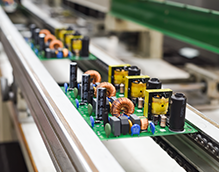
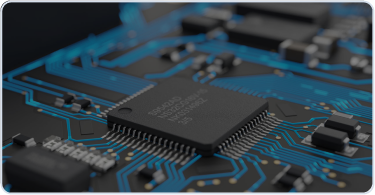
India's Electronics System Design and Manufacturing (ESDM) sector is emerging as a strategic pillar of the country's digital and industrial transformation. Driven by strong domestic demand, a skilled talent pool, and government initiatives such as the Production Linked Incentive (PLI) Scheme and the India Semiconductor Mission, India is rapidly strengthening its position in global electronics and semiconductor value chains.
US$500 Bn
Projected size of India's electronics manufacturing industry by 2030.
US$2 Trillion
Total exports target by 2030–31.
US$103 Bn
Semiconductor Market by 2030
Food Processing
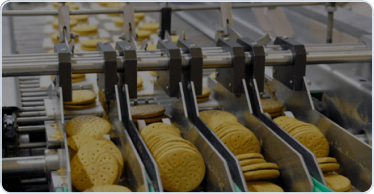
India's food processing sector is one of the country's fastest-growing industries, supported by a strong agricultural base, rising consumer demand and a rapidly expanding retail ecosystem. As one of the world's largest producers of milk, spices, pulses, fruits and vegetables, India offers a reliable and cost-efficient supply of raw materials for food processing. Supported by 100% FDI, Production Linked Incentive (PLI) schemes, Mega Food Parks and robust cold-chain infrastructure development, the sector presents significant opportunities for investment.
100% FDI
permitted under the automatic route in food processing and food retail of products manufactured/produced in India.
5th
Globally In production, consumption, exports and anticipated growth, making chemicals one of India's largest industries.
US$84.24 Billion
Gross Value Added (GVA) target for India's chemicals sector by 2047, implying a ~10% CAGR under the Viksit Bharat@2047 vision.
Chemicals
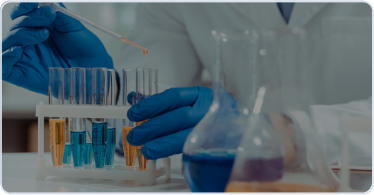
India's chemicals industry is one of the fastest-growing sectors of the economy and serves as a critical enabler for manufacturing, agriculture, healthcare, infrastructure and consumer industries. Spanning petrochemicals, specialty chemicals, agrochemicals, polymers, dyes and intermediates, India has emerged as a key player in global chemical supply chains. Supported by strong domestic demand and government initiatives such as Make in India and Production-Linked Incentive (PLI) schemes, the sector offers significant opportunities for investment and sustainable growth.
US$1
Trillion Chemicals Market Target by 2040; US$400+ Billion Market by 2030
2nd
largest manufacturer and exporter of dyes
3rd
largest consumer of polymers globally
4th
Largest Producer of Agrochemicals Globally and Major Exporter
Textiles
India's textiles and apparel sector is one of the country's oldest and most strategically important industries. As one of the world's largest producers of textiles, cotton and handwoven fabrics, India offers a complete value chain spanning fibre, yarn, fabric, apparel and technical textiles. Supported by initiatives such as PM MITRA Parks and Production Linked Incentive (PLI) schemes.
$100 Bn
Textile & Apparel Exports Target by 2030
10%
CAGR Of India’s textile industry, reaching $350 Bn by 2030
US$10 Bn
Technical Textile Exports Target by 2030
Indian Facilities
Infrastructure Details
Greenfield Industrial Cities & its features
Industrial Corridors driving Industrial Efficiency
Healthcare
HDI/Human Resource
Tourism
Infrastructure
Greenfield Industrial Cities
Industrial Corridors
Healthcare
HDI/Human Resource
Tourism
Infrastructure Details
Greenfield Industrial Cities & its features
Industrial Corridors driving Industrial Efficiency
Healthcare
HDI/Human Resource
Tourism
2nd largest
Road Network Globally
4th Largest
Rail Network Globally
9
Indian ports rank in the world’s top 100
3rd Largest
Air Passenger Market by 2030
47,000 +
Compliances Reduced and 1,500+ Obsolete Laws Repealed to Improve Ease of Doing Business
95 +
Minerals India produces over 95 minerals, which include fuel, metallic, non-metallic, atomic and minor minerals (including building and other materials)
Default Layer 1 Image
12
Industrial Smart Cities Approved under the National Industrial Corridor Development Programme (NICDP)
Key Features
Planned from Scratch; Holistic and integrated approach to infrastructure and urban planning; Plug-and-Play Efficiency; Focus on sustainability, business and Advanced Infrastructure
11
Industrial Corridors Under Development Across India
368
notified Special Economic Zones (SEZs)
10,000+
HealthTech & Healthcare Startups
60%
of Global Vaccine Demand Supplied by India
16.4 %
Medical devices market expected to grow to US$ 50 billion by 2030 with a CAGR of 16.4 %
31%
of the World's STEM Graduates are from India
3rd
Globally in Scientific Publications
43rd
Rank in International IP Index 2025
28.8 years
Median age of the population
72 years
Average life expectancy
54 Indian Universities
Among QS World University Rankings 2026
9.52 Mn
Foreign tourists travelled to India in 2023
US$28 Bn
Forex earned in 2023
42
World Heritage Sites
7100+
Daily Aircraft Movement from 33 international and 105 domestic airports
sustainability & initiatives
Update
Initiatives
Update
1Bn Tonnes
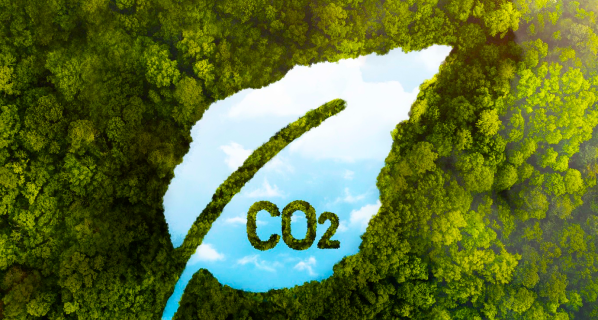
Reduction in Projected Carbon Emissions by 2030
By 2070
Achieve net zero emissions
National Manufacturing Mission
Electric Vehicles
Sustainable Agriculture
Go Green
Initiatives
National Manufacturing Mission

Accelerating domestic manufacturing of clean energy technologies including solar PV modules, advanced chemistry cell (ACC) batteries, green hydrogen equipment, EV components, wind turbines and grid-scale energy storage systems to strengthen India's clean-tech value chain.

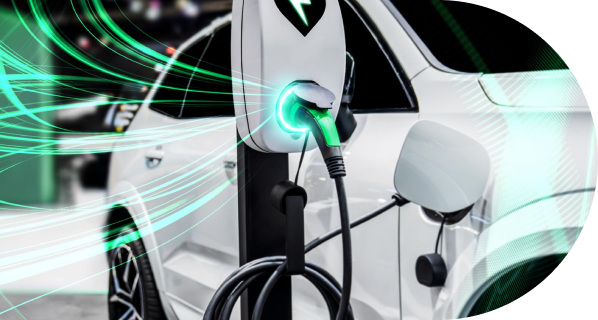
Electric Vehicles

Advancing EV adoption and domestic manufacturing through PM E-DRIVE, PLI schemes, battery manufacturing incentives and expansion of charging infrastructure to support India's transition to sustainable transportation.
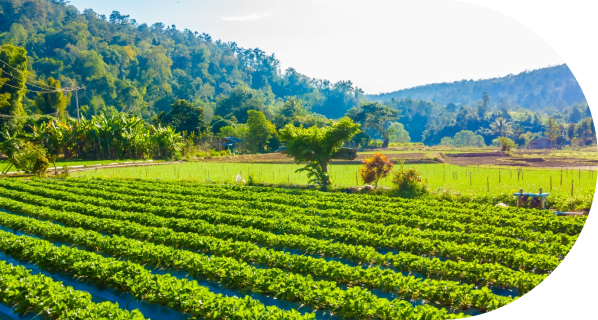
Sustainable Agriculture

Promoting climate-resilient farming, efficient water use, natural farming practices, precision agriculture and sustainable food systems to enhance productivity while reducing environmental impact.
Go Green

Encouraging investments in renewable energy, green infrastructure, circular economy solutions and low-carbon technologies through green bonds, sustainability-linked financing, policy support, and global partnerships.