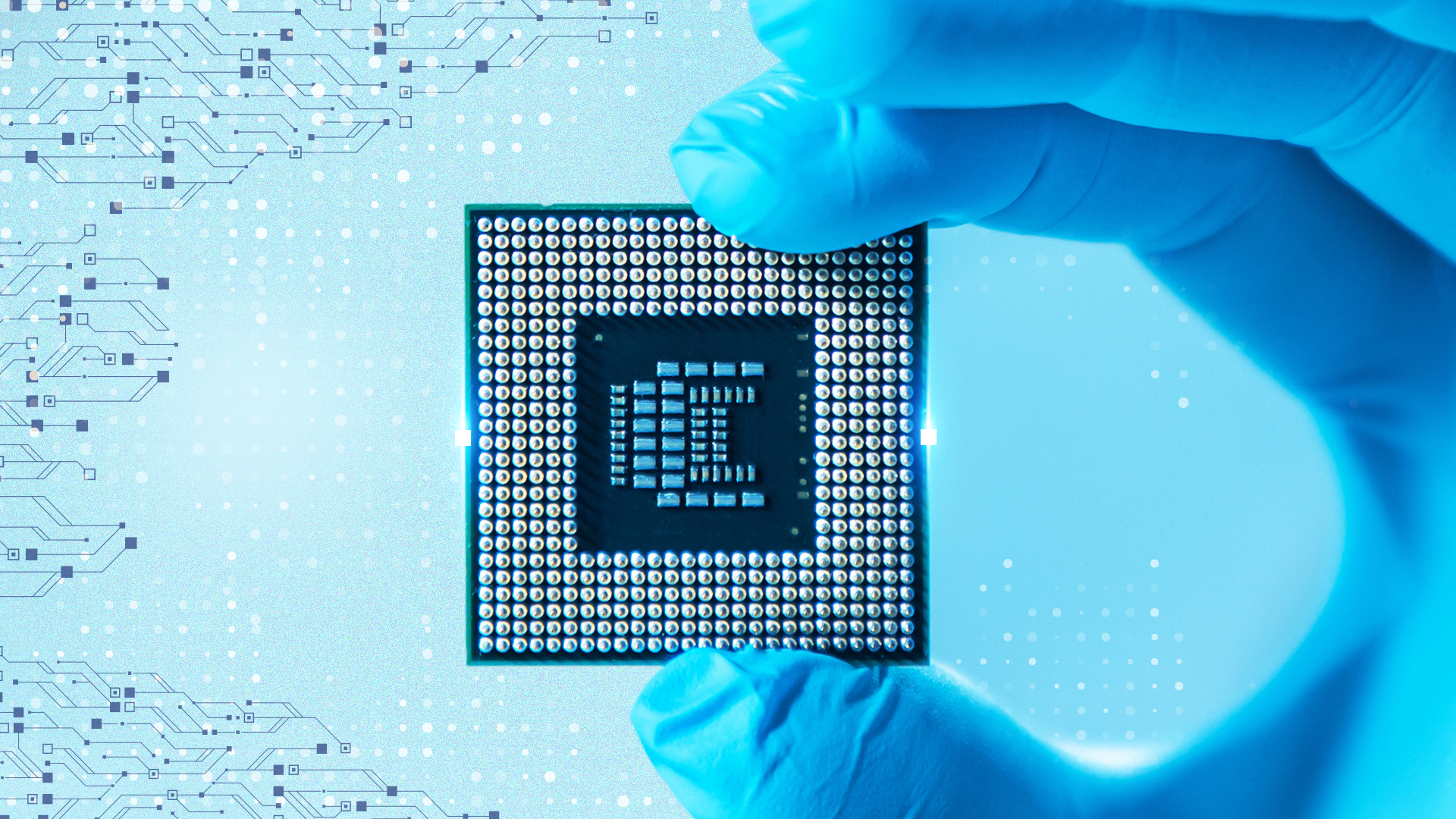
Semiconductors have become the backbone of the modern economy, underpinning everything from consumer electronics and electric vehicles to cloud computing, artificial intelligence (AI), defence systems, and advanced manufacturing. The global semiconductor market is expected to reach $1 trillion by 2030.[1] As global demand accelerates and supply chains re-engineer to reduce concentration risks, nations worldwide are reassessing where and how chips are designed, manufactured, and packaged.
India is no longer merely positioning itself as a large consumer market within this ecosystem; it has emerged as a serious destination for semiconductor investment, backed by policy certainty and scale. India's domestic semiconductor market, valued at about USD 38 billion in 2023, is projected to cross USD 100 billion by 2030.[2] With the Semicon India Mission now translating policy intent into actual projects, investors are seeing movement on the ground rather than just announcements.
Table of contents:
- Manufacturing momentum on the ground: Fabs, OSATs, and emerging semiconductor clusters
- Strengthening the semiconductor supply chain: Electronics Components and Manufacturing Scheme (ECMS)
- Design, R&D, and skills: Building India's semiconductor innovation base
- Global partnerships and technology collaborations
- Toward 2030: From policy momentum to production scale
From vision to ground execution: India's semiconductor journey since ISM launch
India's formal push into semiconductors took shape in 2021 with the launch of the India Semiconductor Mission (ISM), backed by an outlay of ₹76,000 crore. The objective was to reduce India's dependence on imports and build domestic capability across the value chain, from chip design to fabrication, assembly, testing, and packaging. [3]
Since its launch, ISM 1.0 has translated policy ambition into execution. To date, 10 semiconductor manufacturing projects have been approved, with cumulative investment commitments of approximately ₹1.60 lakh crore across six states.[4] These approvals cover a mix of fabrication units, OSAT facilities, ATMP operations, and advanced packaging, signalling a deliberate shift away from isolated projects towards an integrated ecosystem approach.
Recent Union Cabinet approvals for four additional semiconductor manufacturing units in Odisha, Punjab, and Andhra Pradesh, with a total outlay of ₹4,600 crore, further underline the scale-up underway. Together, these projects are expected to generate direct employment for over 2,000 skilled professionals, alongside significant indirect employment across electronics manufacturing and ancillary services.[5]
Manufacturing momentum on the ground: Fabs, OSATs, and emerging semiconductor clusters
India's semiconductor ambitions are increasingly reflected in tangible manufacturing activity. One of the most significant developments is Tata Electronics' semiconductor fabrication facility at Dholera, Gujarat, being developed in partnership with Powerchip Semiconductor Manufacturing Corporation (PSMC) of Taiwan. With an investment of around ₹91,000 crore and a planned capacity of 50,000 wafers per month, this facility represents one of the most advanced fabs currently under development in the country.[6]
Complementing front-end fabrication, Micron Technology's ATMP facility at Sanand, Gujarat, marks a critical inflexion point for India's semiconductor ecosystem. With an investment exceeding ₹22,500 crore, the facility anchors India's entry into large-scale memory assembly, testing, and packaging.[7] Beyond capacity creation, the project establishes operational scale, process discipline, and manufacturing repeatability. As ATMP and OSAT operations typically form the first scalable layer of a semiconductor ecosystem, Micron's presence strengthens supplier confidence. It accelerates the development of ancillary ecosystems around chemicals, materials, precision engineering, and logistics.
Several other OSAT and advanced packaging projects approved under ISM are expanding India's footprint across regions. These include CG Power's OSAT facility in partnership with Renesas Electronics, Tata Semiconductor Assembly and Test in Assam, Kaynes Semicon in Gujarat, and a HCL–Foxconn joint venture in Uttar Pradesh. Together, they are creating semiconductor clusters across western, northern, and eastern India, reducing geographic concentration and building resilience.
Furthermore, state governments play a central role in reinforcing these clusters through customised incentive packages, expedited approvals, and infrastructure provisioning. Access to reliable power and water, plug-and-play industrial parks, logistics connectivity, and workforce facilitation are increasingly being aligned with the specific needs of semiconductor manufacturing. This convergence of central incentives under ISM with state-level execution capability is strengthening India's manufacturing readiness and improving project economics for investors.
Strengthening the semiconductor supply chain: Electronics Components and Manufacturing Scheme (ECMS)
While semiconductor fabrication and OSAT facilities are the visible anchors of India's chip ambitions, a resilient ecosystem ultimately depends on the availability of high-quality components, sub-assemblies, and materials at scale. To address this, the government launched the Electronics Components and Manufacturing Scheme (ECMS) in April 2025. The scheme is aimed at accelerating domestic capacity in electronics components that directly support semiconductor manufacturing and downstream electronics production.
With a total outlay of ₹22,919 crore and a six-year tenure, ECMS aims to build a strong, self-sustaining component ecosystem by attracting both domestic and global investment, increasing value addition, and deepening India's integration into global electronics and semiconductor supply chains. As of September 2025, investment commitments under the scheme have reached ₹1.15 lakh crore, nearly double the original target, underlining strong industry response and execution momentum.[8]
The first set of seven ECMS-approved projects, involving an investment of ₹5,532 crore, is expected to generate production worth ₹44,406 crore and create over 5,000 direct jobs.[9] These projects span high-value components such as multi-layer and HDI printed circuit boards, camera module sub-assemblies, copper clad laminates, and polypropylene films, all of which are critical inputs for smartphones, automotive electronics, telecommunications equipment, industrial systems, and data infrastructure. Localising these inputs reduces import dependence, improves supply reliability, and shortens lead times for manufacturers operating in India.
ECMS also aligns with India's broader electronics manufacturing trajectory. Electronics has emerged as the country's third-largest export category, supported by rapid growth in domestic production and exports over the past decade. Strengthening the components layer ensures that semiconductor investments under ISM and device manufacturing under PLI are supported by a complete and competitive supply chain.
Design, R&D, and skills: Building India's semiconductor innovation base
India's semiconductor strategy extends beyond manufacturing capacity to building depth in design, research and development, and skilled talent, which together account for the highest value addition in the semiconductor value chain. India already hosts nearly 20% of the global semiconductor design workforce, giving it a strong comparative advantage in chip architecture, verification, and intellectual property development.[10]
This advantage is being reinforced through the Design Linked Incentive (DLI) Scheme, launched in 2021 and implemented under the Semicon India Programme. Semiconductor design accounts for up to 50% of value addition, 20–40% of bill-of-materials costs, and more than 30% of global semiconductor revenues, making fabless design a strategic priority for long-term self-reliance. As of January 2026, 24 chip design projects have been supported under DLI, covering applications ranging from microprocessors and satellite communication to energy metering, surveillance, and IoT.[11]
The outcomes are increasingly tangible. DLI-supported entities have completed 16 tape-outs, fabricated six ASIC chips, filed multiple patents, and engaged over 1,000 specialised engineers, while leveraging more than three times private investment relative to government support.[12] Access to national design infrastructure, such as the ChipIN Centre, shared EDA tool grids, MPW prototyping, and post-silicon validation, has significantly lowered entry barriers for startups and MSMEs.
Complementing DLI, the Chips to Startup (C2S) programme is strengthening the talent pipeline by building semiconductor design capabilities across academic institutions, creating a steady flow of industry-ready engineers. Together, these initiatives ensure that India's growing manufacturingcapacity is matched by indigenous design ownership, skilled manpower, and innovation-led competitiveness.
Global partnerships and technology collaborations
Global partnerships are a key pillar of India's semiconductor industry, enabling access to advanced technology and strengthening research and design capabilities. These collaborations increasingly extend beyond manufacturing to encompass R&D, design, and strategic applications, reflecting a maturing ecosystem.
Several global semiconductor leaders are expanding their research and development footprint in India, reflecting confidence in the country's engineering talent.NXP Semiconductors, for instance, has committed over $1 billion in India, with a focus on automotive electronics, industrial systems, and telecommunications.[13] Such R&D-led investments are critical for aligning product development with emerging demand in electric mobility, connected infrastructure, and next-generation communications.
India's strength in semiconductor design further reinforces these partnerships. The country hosts a significant share of the global design workforce, attracting firms such as Analogue Devices, which continue to expand their design and engineering operations. Indian conglomerates, including the Tata Group, are also leveraging global partnerships to integrate design, advanced packaging, and manufacturing, creating vertically aligned capabilities within the domestic ecosystem.
Strategic and geopolitical considerations are also shaping collaboration models. India is increasingly engaging with international partners on trusted supply chains and security-sensitive applications, including defence and aerospace electronics. Discussions and cooperation with entities linked to the United States Space Force underscore India's emerging role in secure semiconductor manufacturing and advanced electronics for national and allied requirements. Such engagements will further enhance India's credibility as a reliable partner within critical global supply chains.
Collectively, these partnerships position India not just as an alternative manufacturing location, but as an active participant in global innovation networks.
Toward 2030: From policy momentum to production scale
India's semiconductor ecosystem is in a decisive phase. The shift from early execution to scale is now evident, and recent Budget announcements make it clear that the emphasis is on scaling what's underway and building lasting capability. In the 2026–27 Budget, the government launched India Semiconductor Mission (ISM) 2.0, with funding to build on the first phase and strengthen capabilities in equipment, materials, design, supply chains, and skills. [14]
Alongside this, the Budget raised the outlay for the Electronics Components Manufacturing Scheme (ECMS) from its original allocation to ₹40,000 crore, reflecting strong investor interest and the importance of building a robust component ecosystem that supports semiconductors and downstream electronics. [15]
Together, these steps signal a clear intent: to move beyond capacity creation and build a resilient, competitive semiconductor ecosystem that can support India's growing demand and integrate meaningfully into global supply chains over the coming decade.
The blog is written by Shagun Kansal & Kashika Malhotra