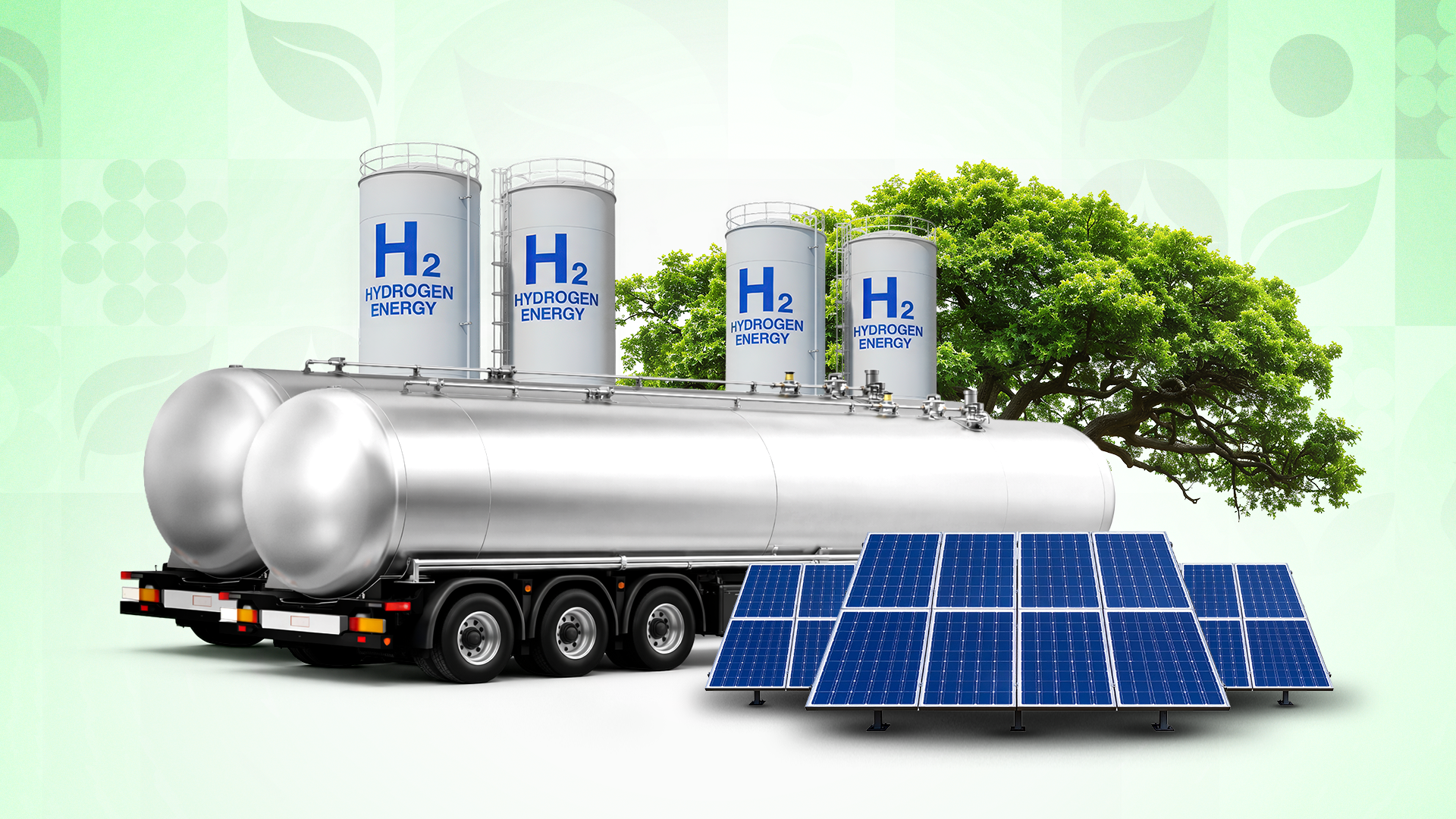
India's clean-energy transition has entered a pivotal stage, driven equally by robust domestic policies and unprecedented levels of international collaboration. India has pledged to achieve 500 GW of non-fossil-fuel capacity by 2030 and to achieve net-zero emissions by 2070. Consequently, the country is rapidly expanding its renewable energy capacity whilst integrating into global energy value chains. Currently, India already generates over 266 GW of non-fossil fuel capacity, surpassing the 50% mark in total installed power capacity as of 2025, mainly due to the expansion of solar power to 135 GW.[1]
This convergence of national ambition and international engagement is positioning India as a critical destination for global investors seeking to invest in renewable energy Sector in India. The ecosystem today is shaped not only by policy incentives but also by technology transfer, global financing, joint ventures, and cross-border value chains. Together, these elements are driving India's emergence as a green-energy manufacturing hub and a future exporter of solar modules, green hydrogen, and related technologies.
Table of contents:
- Solar manufacturing boom: 'Make in India' for the world
- Green hydrogen revolution: India's next frontier
- Power of alliances: International Solar Alliance (ISA) and beyond
- A high-growth market at an inflexion point
- Conclusion
Solar manufacturing boom: 'Make in India' for the world
India's solar trajectory over the last decade has been extraordinary, growing more than fortyfold from 3 GW in 2014 to nearly 144 GW in 2025.[2] This rise in domestic demand, coupled with global supply-chain realignments, has accelerated growth in India's solar manufacturing industry.
Central to this momentum is the Production Linked Incentive (PLI) scheme for high-efficiency solar PV modules, with a total outlay of ₹24,000 crore aimed at integrated manufacturing, from polysilicon to modules.[3] By September 2025, the scheme had attracted ₹52,900 crore in investment and generated over 44,400 jobs. This achievement was enabled through Production Linked Incentive (PLI) allocations for establishing 48,337 MW of integrated and partially integrated manufacturing capacity.
As a result, India's solar module manufacturing capacity has reached around 144 GW per annum in 2025, more than tripling the domestic demand of around 40 GW.[4] This imbalance presents a strategic opportunity: domestic firms and global investors are increasingly viewing India as a viable alternative to China's supply chain. This positions India as the most promising challenger to Chinese dominance, particularly if manufacturers scale up R&D and ascend the value chain.
This dynamic environment is fostering a surge in joint ventures and technology alliances, driving cost efficiencies while strengthening global competitiveness and export readiness. With protective measures such as the Approved List of Models and Manufacturers (ALMM) and anti-dumping proposals to safeguard domestic players, the policy framework continues to incentivise make-in-India solar manufacturing investment for global markets.
For investors evaluating India solar Supply chain manufacturing investment, the landscape offers significant upside:
- Manufacturing capacity far exceeds domestic consumption, creating clear India renewable energy export opportunities.
- International funds are collaborating with Indian manufacturers to jointly serve markets in Africa, Europe, and Latin America, regions where demand for affordable, diversified solar modules is growing.
India is on track to evolve from a large solar market to an indispensable node in the global solar supply chain.
Green hydrogen revolution: India’s next frontier
Green hydrogen revolution: India's next frontier
If solar power defined the last decade of India's energy growth, green hydrogen is poised to shape the next. Through the National Green Hydrogen Mission (NGHM) launched in 2023, India aims to become a global centre for producing, using, and exporting green hydrogen and its derivatives.[5]
Of the Mission's total outlay of ₹19,744 crore, incentives worth ₹17,000 crore have been allocated to green hydrogen production and electrolyser manufacturing.
By late 2025, projects had already been awarded for 3,000 MW per annum of electrolyser manufacturing, 8.62 lakh tonnes of annual green hydrogen production, and 7.24 lakh tonnes of green ammonia production.[6]
India is well-positioned to become a global renewable energy export hub. Its strategic advantages are threefold: access to some of the world's lowest renewable energy costs, an extensive coastline and port infrastructure, and proximity to demand centres across Europe and East Asia. This potential is further reinforced by strong, localised policy support, including ambitious targets such as Gujarat's 500,000 TPA goal and Kerala's commitment to developing a 'Green Hydrogen Valley' cluster.[7]
These fundamentals underpin a wave of green hydrogen India investment opportunities, especially in:
- Electrolyser manufacturing
- Hydrogen storage and pipeline solutions
- Port infrastructure for ammonia export
- Industrial clusters producing green steel, green methanol, and fertilisers
India's efforts to build global partnerships are also bolstering industry collaborations. India and Germany, for example, signed the Indo-German Green Hydrogen Roadmap in 2024, followed by a landmark $1.3 billion project to convert Andhra Pradesh's Mulapeta port into a global export hub for green hydrogen and ammonia by 2029.[8] This agreement depends on blockchain-verified supply chains that fully comply with EU regulations.
India's push to become a green hydrogen export hub 2030 is strongly aligned with global decarbonisation needs, and investors seeking long-term returns in next-generation fuels are entering at an optimal point in the growth curve.
Power of alliances: International Solar Alliance (ISA) and beyond
International collaboration is central to India's renewable energy growth, as evidenced by the International Solar Alliance (ISA), the world's largest solar-focused multilateral platform established by India and France. As the host nation and driving force behind ISA's agenda, India has established itself at the centre of global technology transfer, blended-finance mobilisation, and solar market standardisation across more than 120 signatory countries.
Under India's leadership, the ISA facilitates the cross-border flow of capital and technology. Its Global Solar Facility is facilitating international financing for high-impact projects; the Viability Gap Funding mechanism is opening opportunities in the least-developed markets; and initiatives such as the SolarX Startup Challenge and STAR-C capacity-building programme are strengthening the innovation and skills pipeline across member nations. The 2025 ISA Assembly in New Delhi reinforced this momentum by setting strategic pillars on catalytic finance, global capability centres, digitalisation, and harmonised technology standards, all critical enablers for solar energy collaboration in India and internationally.[9]
These alliances are now catalysing joint development of large solar parks, hybrid solar-wind projects, and energy-storage systems, with foreign partners bringing advanced technologies and project financing. At the same time, India offers scale, policy stability, and manufacturing strength. The co-development of smart-grid solutions and cross-border R&D partnerships further illustrates how India's renewable ecosystem is becoming increasingly internationalised.
For global investors, ISA has become a trusted framework for navigating India's solar sector, reducing perceived risks, improving market transparency, and creating a predictable pipeline of investable projects. This collaborative architecture not only accelerates India's domestic deployment but also strengthens its position as a global solar solutions provider.
A high-growth market at an inflexion point
India's renewable landscape provides one of the world's most favourable investment environments. The country permits 100% FDI under the automatic route for renewable energy, simplifying market access and enabling cross-border partnerships.[10]
The return on investment (ROI) in India's renewable energy sector varies, but the strongest outlooks are concentrated in three key subsectors. First, solar PV supply chain manufacturing offers medium- to long-term returns, benefiting from economies of scale and India's growing integration into the global export supply chain. Second, the Green Hydrogen segment is poised for robust growth, driven by anticipated large-scale offtake agreements and persistent global supply shortages. Lastly, Battery Storage presents compelling opportunities as it becomes increasingly essential to ensure grid stability and support the rapid expansion of India's Electric Vehicle (EV) ecosystem.
State manufacturing policies, such as Maharashtra's capital subsidies, Gujarat's large RE and hydrogen targets, and Andhra Pradesh's integrated clean-energy policy, further reinforce the opportunity landscape.
India is shifting from an energy importer to a future clean-energy exporter. With supply chains diversifying and global climate financing accelerating, the opportunity for early entry is now, before competition intensifies and asset valuations rise.
Conclusion
India's rise in renewable energy is inseparable from the global partnerships shaping it. As international collaboration converges with national ambition, the country is scaling solar deployment, expanding manufacturing capabilities, and advancing green hydrogen ecosystems at a pace that places it among the world's most influential clean-energy players.
PLI-driven solar manufacturing, enabled by joint ventures and global supply-chain integration, is positioning India as an export-ready hub for high-efficiency modules. At the same time, the National Green Hydrogen Mission – strengthened by bilateral corridors with Germany, Japan, and Europe, and backed by multilateral finance – has progressed from planning to actual implementation. Initiatives such as the International Solar Alliance bolster this drive by standardising regulations, rallying blended finance, and facilitating technology transfer across regions.
Collectively, these alliances are transforming India from an energy-importing nation into a future exporter of clean energy, green molecules, and solar technologies. For investors, this is a uniquely strategic moment: India's domestic climate priorities and global decarbonisation needs are aligned, capital flows are expanding, and international partners are actively co-creating India's green industrial base. The transition is accelerating, and those who enter now will help shape and benefit from the next decade of global renewable growth.
This article is written by Ayush Shukla