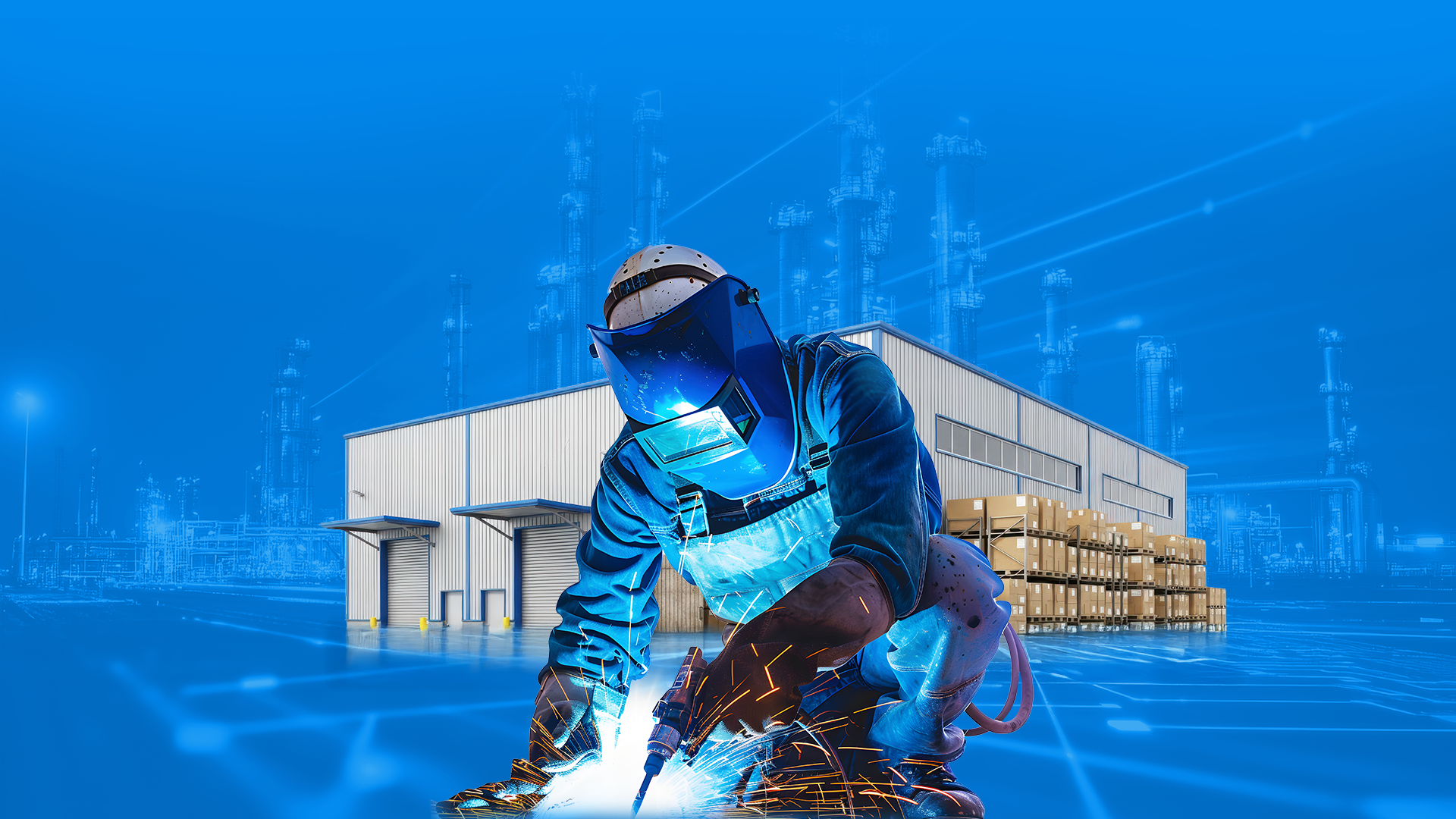
For decades, India's North Eastern Region (NER) was described as remote, resource-rich, yet distant from markets. That perception is now changing decisively. As infrastructure takes shape, policy focus deepens, and regional connectivity improves, Northeast India's investment opportunities are increasingly attracting global and domestic investors. Today, Northeast India is emerging not as a peripheral market but as a strategic manufacturing and logistics frontier aligned with India's next phase of industrial growth.
Spanning eight states – Arunachal Pradesh, Assam, Manipur, Meghalaya, Mizoram, Nagaland, Sikkim, and Tripura – the region lies at the intersection of India's domestic growth priorities and its outward economic engagement with Southeast Asia. Backed by large-scale public investment, targeted incentives, and cross-border connectivity initiatives, the region offers a compelling case to invest in Northeast India, particularly in manufacturing, logistics and export-led industries.
Table of contents:
- Manufacturing and logistics momentum
- Policy architecture shaping growth: Act East, PM Gati Shakti, and regional incentives
- High-potential sectors for investment in Northeast India
- Northeast India in India–ASEAN trade and regional supply chains
- Leveraging Northeast India for export-led growth
- Conclusion: From frontier to growth engine
Manufacturing and logistics momentum
The investment narrative in Northeast India is increasingly shaped by on-the-ground development and policy initiatives. Over the past decade, sustained public investment has addressed historical connectivity gaps, significantly advancing Northeast India's industrial development and improving the region's readiness for large-scale manufacturing and logistics activity.
Infrastructure-led industrial readiness
Road, rail, air, and inland waterway networks, which are central to ongoing Northeast India's connectivity projects, have expanded rapidly across the region.
A notable development in this regard is India's first international Multi-Modal Logistics Park (MMLP) at Jogighopa, Assam. Built with an investment of ₹693.97 crore, the park aims to enhance connectivity across the Northeast region by integrating waterways, roads, railways, and air networks into a seamless multimodal transport system hub.[1]
As of July 2025, 16,207 km of National Highways have been constructed in the region.[2] The railway budget allocation for the NER has increased fivefold to ₹62,477 crore, including ₹10,440 crore for the current fiscal year. The latest railway development is the launch of the Bairabi–Sairang railway line in Mizoram, connecting Aizawl to the national rail network for the first time.[3] Under the Regional Air Connectivity (UDAN) Scheme, 90 air routes have been operationalised in the region, connecting 12 airports and helipads to the rest of the country.
This fast-paced infrastructure development has not only enhanced connectivity but also drastically reduced transit times for both cargo and labour. Large bridges, such as the Bogibeel Bridge in Assam and the Sela Tunnel in Arunachal Pradesh, have improved all-weather movement, thereby strengthening intra-regional supply chains.
Inland waterways have also emerged as a cost-efficient logistics backbone and a core component of the emerging Northeast India logistics corridor. National Waterway-2 on the Brahmaputra and National Waterway-16 on the Barak rivers are now operational throughout the year for cargo movement. Terminals at Pandu, Dhubri, Jogighopa, Karimganj, and Badarpur have become vital nodes for bulk and over-dimensional cargo, especially for petroleum, cement, and heavy industrial equipment, supporting long-term logistics investment in Northeast India.[4]
Manufacturing investments and industrial scale-up
Manufacturing activity in the region is moving beyond traditional sectors. Assam has attracted large investments in refining, petrochemicals, electronics, and semiconductors. Tata Electronics' upcoming ₹27,000 crore semiconductor unit in Jagiroad, Assam, highlights the region's growing strengths as a competitive manufacturing hub and marks a significant milestone for the Northeast's industrial development landscape.[5] Across the Northeast, industrial units registered under central and state schemes now encompass food processing, textiles, bamboo-based products, pharmaceuticals, plastics, and light engineering.
Industrial estates and plug-and-play facilities, including dedicated industrial parks in Northeast India, supported by state governments, are helping firms reduce entry timelines. Assam alone accounts for the majority of new manufacturing registrations under recent incentive schemes, reflecting its role as the region's industrial anchor.[6]
Policy architecture shaping growth: Act East, PM Gati Shakti, and regional incentives
The transformation of Northeast India is being driven by a deliberate and coordinated policy architecture that aligns connectivity, industrial development, and investment facilitation. Rather than isolated interventions, multiple national and regional frameworks are converging to reduce structural disadvantages, lower logistics and capital costs, and provide long-term visibility for investors. Together, these policies are repositioning the North East Region as a strategically integrated manufacturing and logistics corridor with clear linkages to domestic and international markets.
Act East Policy: From intent to infrastructure
India's Act East Policy has repositioned the Northeast from a geographical periphery to a strategic gateway. Connectivity projects such as the India–Myanmar–Thailand Trilateral Highway and the Kaladan Multimodal Transit Transport Project are designed to integrate the region into Southeast Asian supply chains by combining sea, river and road transport routes.[7]
Rail links with Bangladesh, new land customs stations in Meghalaya and Mizoram, and expanded border trade infrastructure are strengthening cross-border logistics. These initiatives directly support export-oriented manufacturing by reducing distance to ASEAN markets and improving supply chain reliability.
PM Gati Shakti and multimodal logistics integration
PM Gati Shakti provides a unified planning framework for infrastructure across ministries and states. Under PM Gati Shakti Northeast, this has translated into coordinated investments in highways, rail corridors, waterways, gas pipelines, and digital infrastructure, enabling seamless multimodal logistics planning.[8]
Guwahati, Imphal, and Agartala are being developed as multimodal logistics hubs, integrating road, rail, air and water transport. The upcoming Northeast Gas Grid, spanning over 1,600 Km, will further ensure a reliable energy supply for manufacturing clusters, reducing operational risk for energy-intensive industries.[9]
UNNATI 2024 and targeted industrial incentives
At the centre of the region's industrial policy framework is the Uttar Poorva Transformative Industrialisation Scheme (UNNATI-2024). The scheme offers Capital Investment Incentives (CII), Capital Interest Subvention (CIS), and Manufacturing-Linked Incentives (MSLI) for new and expanding units across all eight states.
With an outlay exceeding ₹10,000 crore and registrations open until 2026, UNNATI significantly lowers upfront costs for manufacturers.[10] As of 2025, over 700 applications have been received under the scheme, with the majority concentrated in Assam, followed by Tripura and Sikkim, spanning both manufacturing and service activities. This early-stage pipeline indicates growing investor response to the region's improving industrial ecosystem. Complementary state policies, such as amendments to Assam's Industrial and Investment Policy, further customise incentives for large and mega projects, strengthening the overall investment proposition.
High-potential sectors for investment in North-East India
The investment opportunity in Northeast India is underpinned by a rare convergence of natural resource endowments, improving industrial infrastructure, and targeted policy support. The region offers investors the opportunity to build scale in under-penetrated sectors while benefiting from first-mover advantages, lower factor costs, and proximity to export markets. As connectivity improves and industrial ecosystems deepen, the region is shifting from resource extraction to value-added manufacturing and services across multiple sectors.
Agro-processing and food manufacturing
The Northeast's diverse agro-climatic conditions support high-value horticulture, spices, tea, organic produce, and niche crops, with strong domestic and export demand. Sikkim's status as India's first fully organic state, combined with the expansion of cold-chain, testing, and logistics infrastructure across the region, is enabling the shift from primary agriculture to export-oriented food processing. These strengths position the region well for investments in packaged foods, nutraceuticals, beverages, and speciality agri-products.[11]
Textiles, bamboo, and natural fibre industries
With over half of India's bamboo resources and a deep-rooted handloom tradition, the Northeast is emerging as a national hub for bamboo-based manufacturing and natural-fibre textiles. Beyond traditional uses, bamboo is increasingly used in engineered products such as boards, composites, furniture, packaging materials, and bio-based alternatives. The National Bamboo Mission has played a catalytic role by supporting plantation development, processing infrastructure, and market linkages, enabling scale and consistency in supply.[12] Textile parks and cluster-based approaches are further supporting value-added manufacturing in handlooms, technical textiles, and sustainable fabrics.
Energy, renewables, and green industries
The region has significant hydropower potential and is seeing increasing investment in solar, green hydrogen, and clean energy infrastructure. Large hydropower projects, combined with decentralised renewable energy initiatives, support both industrial power demand and grid stability. For investors, opportunities extend beyond generation to include the manufacture of renewable components, storage solutions, and ancillary equipment, aligned with India's broader clean energy transition and long-term energy security objectives.[13]
Pharmaceuticals, electronics, and emerging manufacturing
Improving logistics connectivity, skilled talent availability, and region-specific incentives are enabling growth in pharmaceuticals, medical devices, and electronics manufacturing. Assam's emergence as a destination for advanced manufacturing investments reflects growing confidence in the region's industrial capabilities. These sectors benefit from lower operational costs and policy support, serving both domestic consumption and export markets.
Logistics, warehousing, and multimodal services
As physical connectivity strengthens, the Northeast is seeing rising demand for logistics parks, inland container depots, cold storage facilities, and last-mile delivery services. Inland waterways on the Brahmaputra and Barak rivers, expanding border trade with Bangladesh, and the development of multimodal logistics hubs are creating a robust platform for integrated supply chain services. For logistics and infrastructure investors, this represents a foundational opportunity to support the region's industrial and export-led growth.
Northeast India in India–ASEAN trade and regional supply chains
Northeast India occupies a strategic position in India's external trade architecture. Sharing international borders with Bangladesh, Myanmar, Bhutan, and Nepal and being the region closest to Southeast Asia, it serves as India's most direct overland and multimodal gateway to ASEAN markets. This geography allows the Northeast to reduce India's traditional dependence on long western and southern maritime routes, offering faster and more diversified trade pathways.
India's trade with ASEAN currently stands at approximately $125 billion and is projected to exceed $200 billion in the coming years.[14] The Northeast is central to enabling this expansion. Connectivity projects under the Act East framework, including cross-border highways, rail links with Bangladesh, inland waterway trade on the Brahmaputra and Barak rivers, and multimodal corridors linking India to Myanmar and Thailand, are steadily integrating the region into regional supply chains. These routes shorten transit times, lower logistics costs, and improve supply chain resilience.
For manufacturers, this connectivity translates into a tangible competitive advantage. Production units in the Northeast can efficiently serve both India's large domestic market and export destinations in Bangladesh and Southeast Asia from a single operating base. As regional value chains diversify and firms seek alternatives to concentrated manufacturing hubs, North-East India is increasingly seen as a strategic bridge between India and the ASEAN economic bloc.
Leveraging Northeast India for export-led growth
For global investors, Northeast India offers a differentiated investment proposition anchored in three advantages. First, cost competitiveness. Lower land and labour costs, combined with capital subsidies and interest support, enhance project viability, particularly for medium-scale manufacturing.
Second, policy certainty. Long-term central schemes, including UNNATI, PM Gati Shakti, and Act East, provide continuity and visibility, while institutions such as NEDFi offer financing and advisory support.[15] Third, strategic market access, with its proximity to ASEAN, improved inland and cross-border logistics and expanded port connectivity, enabling export-led manufacturing models aligned with global supply chain realignment.
As logistics costs decline and industrial clusters mature, the region is expected to see increased participation from multinational manufacturers, regional suppliers, and logistics providers seeking an early-mover advantage.
Conclusion: From frontier to growth engine
The Northeast region, once regarded as a distant frontier, is now emerging as a centre for manufacturing, logistics, and trade. It is being transformed by infrastructure development, policy alignment, and strategic planning. The Hon'ble Prime Minister has eloquently highlighted the region's potential to become the 'New Growth Engine of India'.[16]
For investors looking beyond saturated industrial corridors, the North-East provides a unique combination of policy support, enhanced connectivity, and access to high-growth markets. As India deepens its engagement with ASEAN and strengthens domestic manufacturing, the North-East will become increasingly central to the country's industrial and trade framework. For manufacturers and logistics operators prepared to invest early, North-East India offers not only opportunities but also strategic advantages.