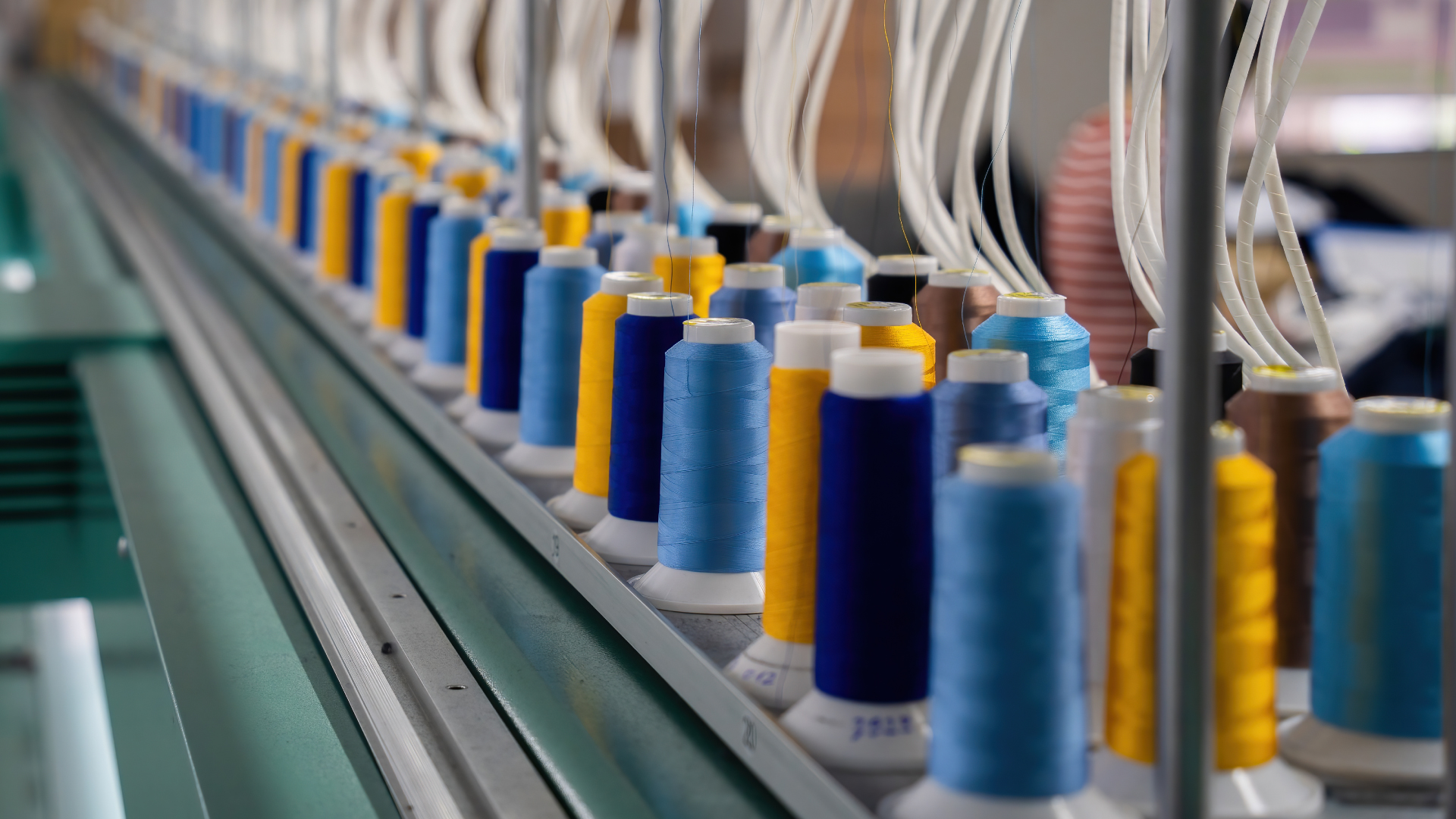
India's textile industry is undergoing a decisive transformation. Long recognised globally for cotton, handlooms, and ready-made garments, the sector is now being reshaped by a strategic pivot towards technical textiles, man-made fibres (MMF), and integrated manufacturing clusters. This shift marks a structural realignment towards higher value addition, greater technology intensity, and enhanced global competitiveness, positioning textiles as a core pillar of India's advanced manufacturing agenda.
Global textile markets are expanding rapidly, with demand increasingly concentrated in high-performance, functional, and sustainable materials. Textiles and apparel already contribute over 8.6% of India's total exports, making the country the world's sixth-largest textile exporter.[1] As demand patterns evolve, India is responding with confidence by aligning policy frameworks, infrastructure, and industrial capacity to capture a larger share of this expanding market, with an ambition to scale the industry to $350 billion and achieve $100 billion in textile exports by 2030.[2]
The convergence of rising global demand for specialised textiles with India's MMF-led scale-up and cluster-based manufacturing strategy is redefining the country's position in global textile value chains. Supported by targeted incentives, plug-and-play industrial parks, and expanding R&D and skilling capabilities, the sector is moving beyond fragmented production towards an integrated, export-oriented ecosystem, creating a compelling, long-term investment opportunity for global investors.
Table of contents:
- Technical textiles: A new growth engine for India's textile sector
- Role of man-made fibres (MMF) in global competitiveness
- State-level manufacturing clusters: Scaling production through integration
- Export resilience and market diversification
- From scale to sophistication: India's next phase of textile growth
Technical textiles: A new growth engine for India's textile sector
While traditional textiles remain important, technical textiles – fabrics engineered primarily for functionality rather than aesthetics – are redefining the industry's growth trajectory. These textiles are used across sectors such as healthcare, defence, infrastructure, mobility, agriculture, and industrial manufacturing, offering durability, safety, and performance advantages over conventional fabrics.
India has already established momentum in this segment. Technical textile exports have recorded robust growth in recent years, with exports increasing by over 15% in FY2024–25, signalling rising global acceptance of Indian capabilities in this sunrise sector.[3] The country's technical textiles ecosystem spans 12 distinct categories, including agrotech, meditech, mobiltech, geotech, and protectech, reflecting the sector's breadth and cross-sector relevance.[4]
The National Technical Textiles Mission (NTTM) – launched in 2020 with an outlay of ₹1,480 crore – has been instrumental in accelerating this shift.[5] The mission focuses on research and development, market development, export promotion, and skill creation, positioning technical textiles as a long-term economic pillar rather than a niche segment. Since its launch, more than 168 R&D projects worth over ₹500 crore have been approved, covering advanced fibres, composites, and specialised applications.[6]
As global markets shift away from basic fabrics, technical textiles offer a more profitable and stable opportunity through high-tech products that are harder for competitors to replicate.
Role of man-made fibres (MMF) in global competitiveness
A defining feature of the global textile transition is the growing dominance of man-made fibres. MMF now accounts for 70–75% of the global fibre market, reflecting consumer and industrial preferences for performance, consistency, and scalability.[7] Technical textiles, in particular, are heavily reliant on MMF such as polyester, nylon, aramid, and advanced composites.
India's MMF exports grew by 6.5% in 2024–25, underlining the country's strengthening position in this segment.[8] Recognising MMF as a strategic lever for export growth, the government has undertaken targeted reforms to reduce cost disadvantages and encourage large-scale investments.
Key among these is the Production Linked Incentive (PLI) Scheme for Textiles, with an outlay of ₹10,683 crore, specifically designed to promote MMF apparel, MMF fabrics, and technical textile products.[9] Recent amendments to the scheme have further lowered entry barriers by reducing minimum investment thresholds, expanding eligible product categories, and easing incremental turnover requirements, thereby improving ease of doing business and accelerating project execution.
Complementing this, GST rationalisation has corrected inverted duty structures by reducing GST on MMF fibres and yarns to 5%, significantly improving working capital efficiency for manufacturers and aligning fibre–yarn–fabric tax rates.[10]
Together, these reforms are strengthening India's MMF ecosystem and enabling domestic manufacturers to compete more effectively with established global producers.
State-level manufacturing clusters: Scaling production through integration
India's textile transformation is being anchored at the state level through the expansion and modernisation of manufacturing clusters. Historically, clusters such as Tiruppur, Surat, Panipat, Ludhiana, and Ichalkaranji have been critical to exports and employment. Today, these clusters are evolving from fragmented production into integrated, technology-enabled ecosystems.
The PM Mega Integrated Textile Region and Apparel (PM MITRA) Scheme represents a shift in cluster-led development. Under this programme, seven large-scale textile parks are being developed across Tamil Nadu, Telangana, Gujarat, Karnataka, Madhya Pradesh, Uttar Pradesh, and Maharashtra, with an outlay of ₹4,445 crore.[11] These parks are designed to provide plug-and-play infrastructure, shared utilities, and end-to-end integration, from fibre to finished products.
Alongside PM MITRA parks, India's existing textile clusters continue to provide a strong manufacturing base. Tamil Nadu anchors knitwear and technical textile production through hubs such as Tiruppur and Coimbatore; Gujarat leads in synthetic fabrics and MMF-based textiles from Surat and Ahmedabad; Maharashtra's Ichalkaranji and Bhiwandi specialise in powerloom and value-added fabrics; Punjab's Ludhiana remains a centre for hosiery and industrial textiles; while Haryana's Panipat is a global hub for home textiles. These clusters are increasingly integrating modern processing, sustainability standards, and export-oriented production.
Investment momentum is already evident. Investment memoranda worth over ₹27,434 crore have been signed across PM MITRA locations, with infrastructure works underway and land acquisition completed at multiple sites.[12] Each park is expected to attract around ₹10,000 crore in domestic and foreign investment, creating large-scale employment and strengthening regional manufacturing bases.[13]
Cluster-based manufacturing reduces execution risk by ensuring integrated logistics connectivity, reliable access to utilities, and coordinated regulatory frameworks. At the same time, it enables economies of scale, supports cost efficiency and enhances production predictability, all critical factors for strengthening global competitiveness and sustaining long-term industrial growth.
Export resilience and market diversification
Despite global trade volatility, India's textile and apparel exports have remained resilient. Exports reached $37.8 billion in FY2025, registering 5% year-on-year growth and maintaining a strong trade surplus of $28.2 billion.[14] Traditional markets, including the US, the European Union, and the United Kingdom, continue to account for over half of the nation's exports, while emerging destinations, such as Bangladesh, the UAE, Australia, and Canada, are gaining market share.
To strengthen exports and reduce market concentration risks, the government has outlined a 40-country diversification strategy, anchored by export promotion councils, Indian missions overseas, and focused branding initiatives.[15] This approach is reinforced by 15 Free Trade Agreements, including the India–UK Comprehensive Economic and Trade Agreement, which are designed to lower tariff and non-tariff barriers and improve access to key global markets.
Technical textiles and MMF-based products are expected to play a pivotal role in achieving India's 2030 textile export target, primarily because of their higher value addition, scalability, and diversified end-use applications. Because technical textiles serve several sectors, they are less cyclical and driven by long-term structural demand. This diversification reduces India's exposure to fashion-led volatility and enables deeper integration into global value chains.
MMF-led production further strengthens this export potential by delivering consistent quality, performance, and volume, which are critical requirements for global buyers. As international sourcing increasingly shifts towards functional, performance-driven textiles, India's growing capacity in MMF fabrics and technical applications positions it as a reliable supplier of specialised products rather than a commodity exporter. Supported by targeted incentives under the PLI scheme, tax rationalisation to improve cost competitiveness, and integrated manufacturing clusters that enable scale, technical textiles, and MMF-based exports are emerging as key drivers of India's next phase of export growth.
From scale to sophistication: India's next phase of textile growth
India's textile sector is entering a structurally different phase of growth—one defined not by incremental capacity expansion, but by technology intensity, integrated manufacturing, and global market alignment. The convergence of technical textiles, MMF-led value chains, and state-level manufacturing clusters is reshaping the sector into a scalable, export-oriented manufacturing ecosystem. This transformation is underpinned by clear policy intent, targeted fiscal incentives, and large-scale infrastructure development, positioning textiles as a strategic component of India's broader industrial and export strategy.
Equally critical to this transition is strengthening India's skill, research, and innovation ecosystem. Through NTTM and allied initiatives, the government is investing in advanced R&D, industry–academia collaboration, and workforce development tailored to next-generation textile applications. Support for specialised degree programmes, upgraded testing and research facilities, startup incubation, and structured skilling pathways ensure that manufacturing scale is matched by technical capability and the depth of innovation. This focus on human capital and applied research enhances India's ability to move up the value chain, reduce dependence on imported specialised materials, and deliver consistent, high-quality outputs for global markets.
For investors, this creates a differentiated opportunity. India offers cost advantages, a growing base of skilled technical talent, an improving ease of doing business, and policy stability, combined with plug-and-play industrial infrastructure and expanding export access through trade agreements and market diversification efforts. As global sourcing shifts towards performance-driven, compliant, and resilient supply chains, India is positioning itself not merely as a production base but as a long-term partner in advanced textile manufacturing.
This blog is written by Aditya Rajyan.