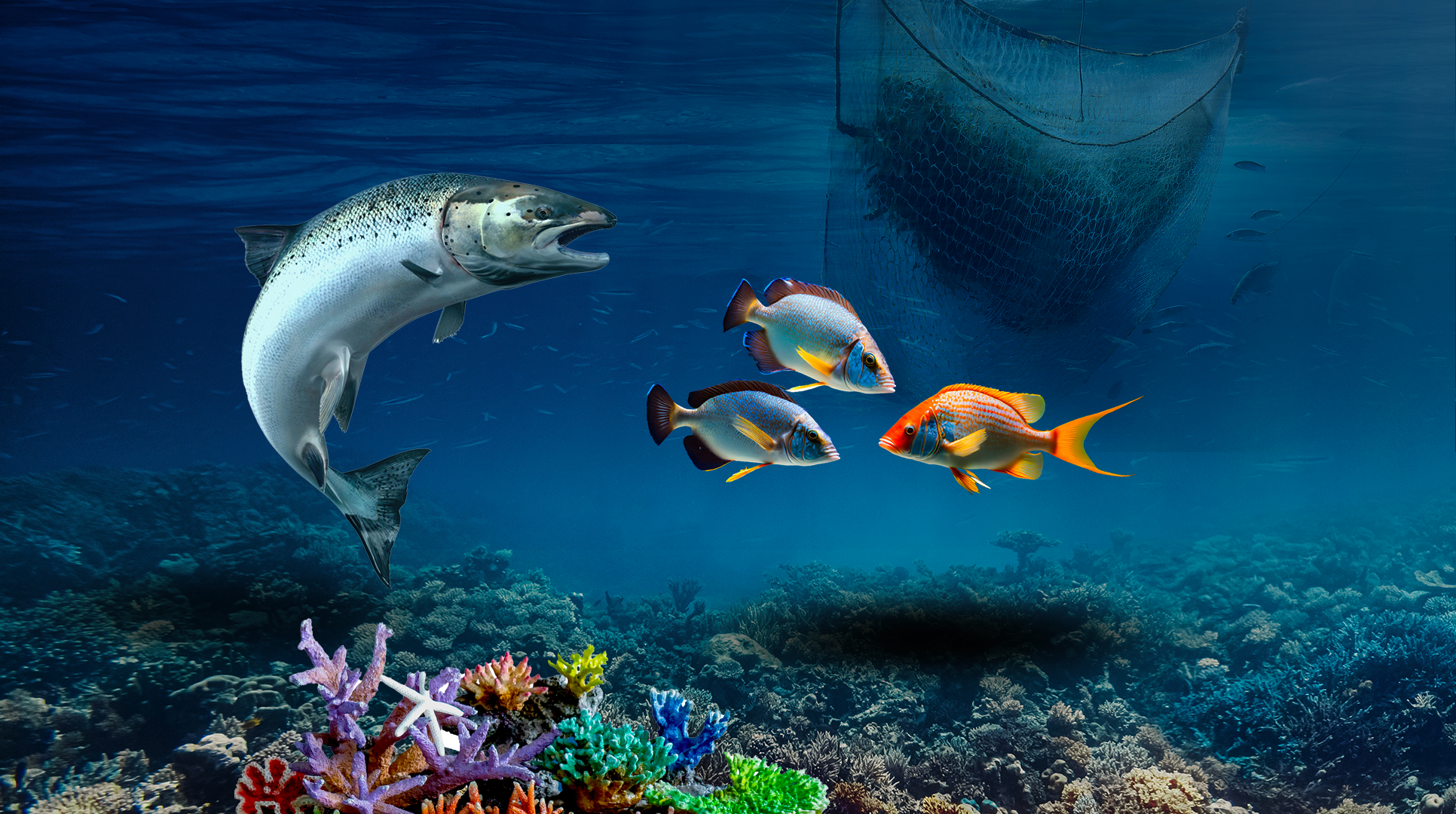
Woven across India’s vast coastlines and rivers, beneath the quiet silver of its waters, emerges one of the nation’s greatest opportunities, rising not from its fields, but from its shores. India’s fisheries sector has grown from its ocean roots into one of the country’s most promising agri-food engines, second only to agriculture in employment. What was once seen as a traditional livelihood activity is now transforming into a modern, technology-driven, export-oriented industry. Today, India stands as the world’s second-largest fish producer and the largest exporter of shrimp, shifting the national narrative from simply harvesting more to creating more value.
Yet, processing and value addition remain at barely 15%, signalling a deep reservoir of untapped potential. From ready-to-cook seafood finding space in Indian homes to deep-sea vessels equipped with chilling and minimal processing systems, value addition is quickly becoming the backbone of India’s emerging blue economy. For investors, this is the moment to anchor early and help define the next wave of growth.
From Raw to Ready: The Rise of Processed Seafood
Urban consumers are embracing convenience, from marinated prawns to frozen fillets to canned tuna. Retail chains, QSRs, and e-commerce platforms are fuelling demand for branded, hygienic, packaged seafood. This shift is expanding the domestic market while significantly improving export margins.
Shrimp: India’s Global Growth Story
Shrimp continues to dominate seafood exports, but the next leap lies in value-added formats such as breaded, battered, seasoned, IQF, sous-vide, and microwavable offerings. These products fetch premium prices across the US, EU, and East Asia. The transition from raw frozen to value-added shrimp could dramatically multiply India’s export earnings.
Deep-Sea Modernisation: Better Harvest, Less Waste
With over 11,000 km of coastline and one of the world’s largest Exclusive Economic Zones, India has immense deep-sea potential. Modern vessels equipped with onboard chilling, grading, and minimal processing technologies are reducing post-harvest losses and providing processors with superior raw material are essential for scaling value-added products.
Increasing Domestic Demand
Indian consumers are moving beyond wet markets. Urban households are adopting vacuum-packed, pre-cut, and pre-marinated seafood. App-based fresh seafood brands and organised retail are reshaping domestic demand and offering a strong base for value-added product lines.
India’s Export Ambition: ₹1 Lakh Crore by 2030
India’s target of ₹1 lakh crore in seafood exports by 2030 hinges on diversifying into high-value categories, strengthening quality compliance, and boosting cold-chain infrastructure. Investors entering value-added processing will be central to driving this export momentum.
Turning Waste into Wealth: By-products Are Becoming Big Business
What was once discarded is now a revenue stream. Collagen, fish oil, fish meal, protein hydrolysates, chitin, and nutraceutical ingredients are emerging as high-value by-products. Circular economy models are turning waste into wealth, improving sustainability while boosting profitability.
India’s New Wave of Processing Infrastructure
Modern packhouses, integrated cold chains, coastal processing hubs, and inland clusters are emerging across the country. Underutilised infrastructure, including older processing units can be optimised and modernised to boost production of premium value-added seafood.
A Sector Ready to Scale
As global appetite for sustainable, premium, value-added seafood grows, India offers scale, skilled labour, abundant raw material, and increasingly strong domestic demand. The early movers in value addition can shape entire supply chains, from deep-sea fishing to processing to exports.
Government Incentives Strengthening the Ecosystem
The Government of India has been working with a forward-looking vision to unlock the full potential of this sector. Department of Fisheries has been supporting the holistic growth of sector through implementation of schemes such as Pradhan Mantri Matsya Sampada Yojana (PMMSY) and Fisheries & Aquaculture Infrastructure Development Fund. The recently launched PM Matsya Kisan Samridhi Sah-Yojana (PM-MKSSY) complements these efforts by promoting formalisation, digitisation, aquaculture insurance, and enterprise development within the unorganised segment.
At the same time, the Ministry of Food Processing Industries is complementing these efforts through the Pradhan Mantri Kisan Sampada Yojana, under which we are supporting the creation of seafood infrastructure and integrated cold chain solutions, critical enablers for export-quality processing and value addition.
India’s Blue Economy: The Road Ahead
India’s fisheries sector is no longer just a story of harvest, it is becoming a story of processing, branding, technology, and global reach. With the right investments, infrastructure, and policy support, India can position itself as a global powerhouse in value-added seafood.
And as the tide turns, India’s Blue Economy is ready to chart a new horizon.
This listicle is written by Deepti Thakur