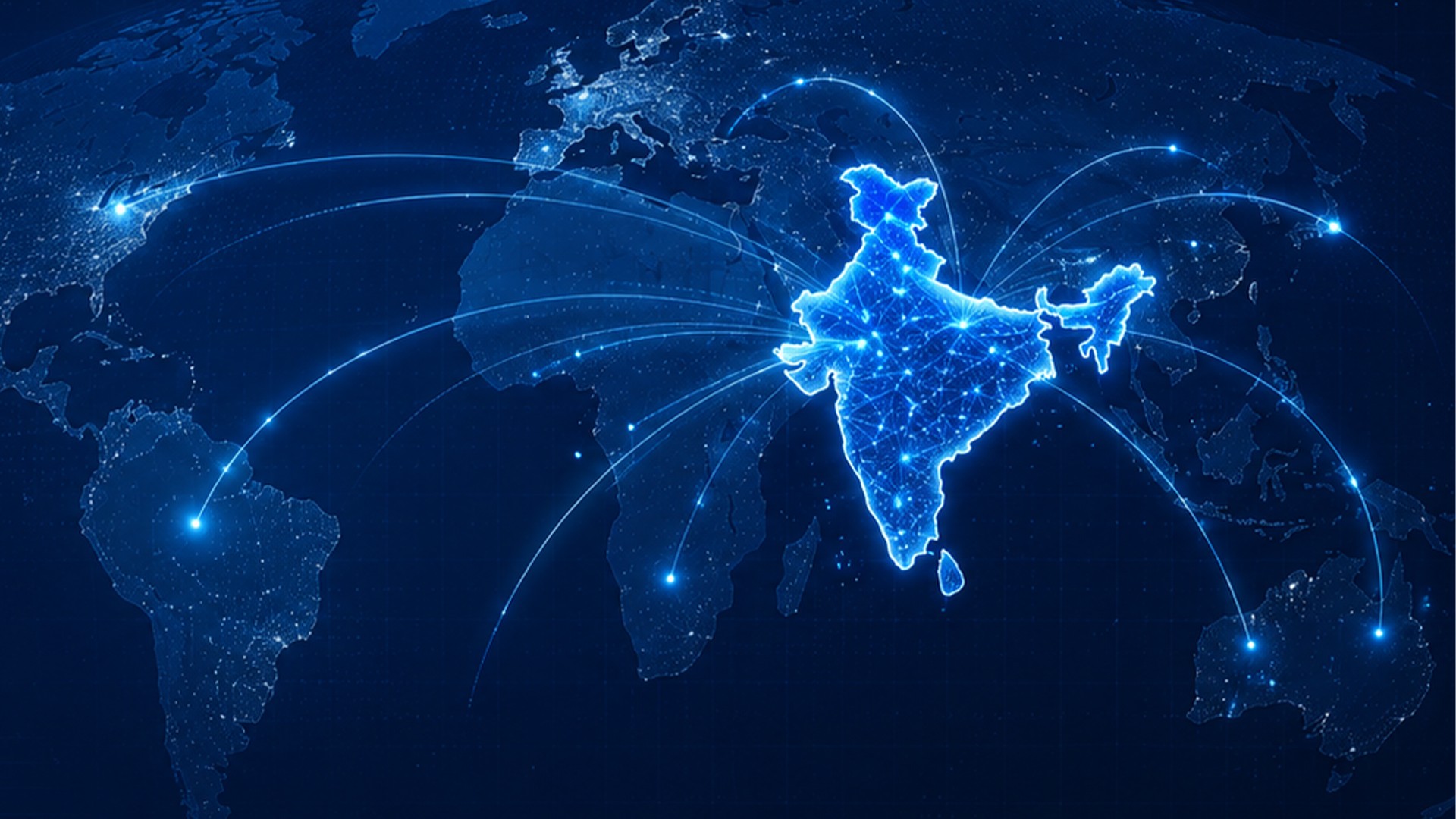
On February 28, 2026, military escalation in West Asia brought the world's most critical energy corridor to a standstill. Within days, the Strait of Hormuz - a narrow, 21-mile waterway through which roughly one-fifth of the world's oil and a quarter of its LNG flows every single day - had effectively been shut to commercial traffic. Tankers sat stranded. Shipping insurance costs surged by 50%. Oil prices leapt from $69 to over $113 a barrel in weeks. Foreign flagged vessels were embargoed. The world, which had grown quietly comfortable with the idea that energy would always find a way, discovered it would not - not automatically, not for everyone.
For India, which imports nearly 88% of its crude and depends on the same Strait for nearly half its LNG supply, this was an acute crisis. There were real shortages of LPG, the cooking gas that Indian households depend on. Refineries were squeezed. Export duties on diesel and aviation fuel were imposed to protect domestic supply. What happened next is what makes India's story worth telling every investor, manufacturer, supplier, who is trying to figure out where in the world to build their next growth story.
Diplomatic Outreach
While the international community weighed its options, India engaged directly, building on its strong base of diplomatic ties in the region – holding three direct conversations with Iranian Foreign Minister. The result: Iran granted passage through the blockade. Indian-flagged LPG tankers Pine Gas and Jag Vasant crossed the Strait carrying 92,000 tonnes of cooking gas. The Indian Navy, operating under Operation Sankalp, escorted them for 20 hours through the Gulf of Oman to safety.
That outcome was not luck. It was the product of something far more durable: a foreign policy architecture that has kept India on speaking terms with Washington, Moscow, Tehran, and Riyadh — simultaneously. In a world grappling with ever-changing geopolitical lines, that is an extraordinary asset. And it is an asset that every business manufacturing or investing in India inherits.
The Sweet Spot: Where Crisis Becomes Opportunity
India imports 88% of its crude, a structural reality known to all. The conclusion the government has drawn from 2026 is not only should India strategically reduce import dependence but also manage that dependence far more strategically. Two concrete actions define this shift. First, India is aggressively expanding its strategic petroleum reserves - the underground storage caverns that function as the country's emergency energy buffer. New facilities at ISPRL's Chandikhol in Odisha with an estimated capacity of 4 MMT and an expanded site at Padur in Karnataka are underway, with the government's broader plan targeting 11.8 MMT of total storage capacity by 2029, more than double of what exists today. These are not mere proposals - they are active infrastructure projects. Second, India has been steadily reducing its dependence from within. The ethanol blending programme has taken petrol from 1.5% ethanol in 2014 to a mandatory 20% today, saving USD 16.8 billion in foreign exchange. Renewables now make up 50% of installed power capacity - a Paris Agreement commitment achieved five years ahead of schedule. And on aviation fuel - one of the hardest fuels to clean up - India cleared its biggest regulatory barrier in April 2026, formally recognising SAF-blended jet fuel in law for the first time, with mandatory blending targets from 2027 and the feedstock advantage already there, waiting to be scaled.
Every $1 drop in the oil price saves India USD 1.5 billion (INR 13,000 crore) annually - and that fiscal headroom is being ploughed directly back into energy infrastructure and manufacturing incentives.
The conclusion is straightforward: India's fossil fuel dependency will continue for sometime but it is methodically reducing, storing more when prices are low, and building the diplomatic architecture to ensure supply even when markets are in crisis. That is a credible, multi-layered energy strategy - and it is the foundation on which India's investment case rests.
Why India Is the Right Place to Invest
For manufacturers with supply chains that transit the Gulf, the Hormuz crisis was a live stress test – India's response set it apart. That distinction is the pitch. When you build in India, you are not just accessing a market of 1.4 billion people and a competitive cost base. You are anchoring your operations in an economy whose government has demonstrated, under real pressure, that it can manage geopolitical disruption through relationships.
The trade architecture backing this is equally significant. In the months immediately surrounding the crisis, India concluded the most ambitious run of trade agreements in its history. The India–US Interim Trade Framework, announced February 7, reduced reciprocal tariffs and deepened economic integration with India's most important strategic partner. The India–GCC Free Trade Agreement negotiations launched the same month — cementing in trade law the exact Gulf relationships that had kept Indian tankers moving through the Strait. In March, India and Canada formally launched CEPA negotiations targeting $50 billion in bilateral trade by 2030. And in April 2026, the India–New Zealand FTA was signed, granting 100% zero-duty access for all Indian exports to New Zealand, with New Zealand committing to facilitate up to $20 billion in investment into India over 15 years. In the middle of a geopolitical crisis, India was not retreating from global trade — it was accelerating into it.
The IMF's April 2026 World Economic Outlook said it perhaps most plainly of all: the ASEAN-5 bloc went down by 0.5 percentage points; India's growth forecast went up by 0.6 percentage points— the starkest single data point illustrating how differently India absorbed the same shock as its regional competitors.
Add to this the fundamentals: India's FDI inflows crossed $94.5 billion in FY2025–26, manufacturing up 18% year-on-year, 100% FDI under the automatic route in most sectors, PLI incentives across 20+ industries, and a fast-track approval process for renewable energy and battery manufacturing introduced in May 2026.
Every component manufactured in India is one less component crossing a potential chokepoint. Today it is the Strait of Hormuz, tomorrow it can be the Malacca Strait or the Suez Canal

Original Source: "Shipping's Chokepoints: The World's Most Critical Maritime Passages." Statista, 2024.
Every factory here is a bet on a country that, when it mattered most, kept the lights on and the tankers moving — and that is precisely the kind of track record that should give investors the confidence to move.
The world is not getting less volatile. The question for every global business is not whether disruption will come again. It will, but which country's stability, consumption market, investor ecosystem, relationships, and diplomatic reach you would want behind your operations when it does. India's answer is clear: a billion-plus consumer market growing faster than any comparable economy, open across sectors, and proven, under real pressure to keep its doors open and its business running.