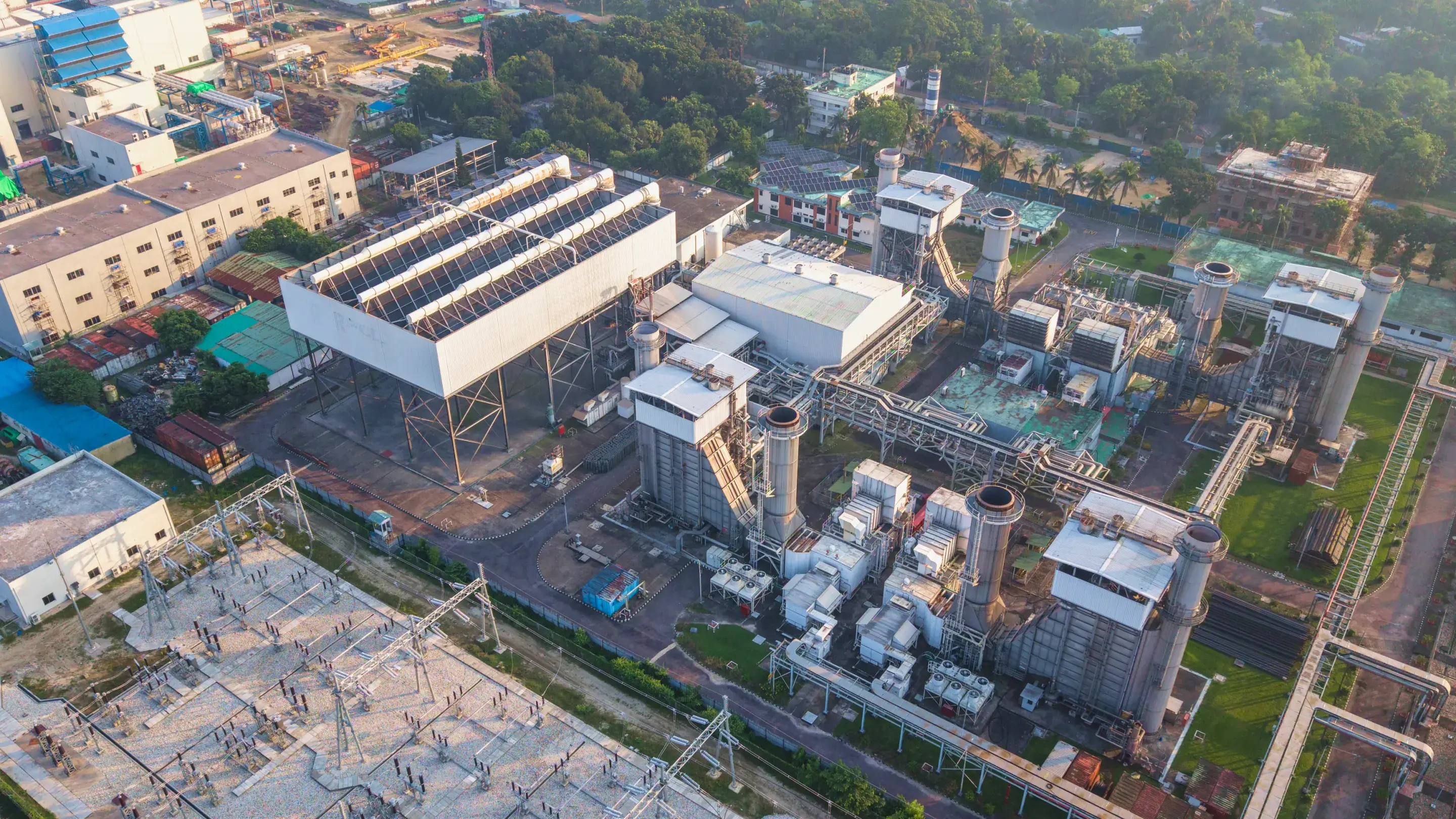
Drive west out of Chennai along the highway toward Bengaluru and, somewhere past the airport, the landscape changes in a way that is easy to miss and hard to replicate. The Sriperumbudur–Oragadam–Irungattukottai belt does not announce itself as anything more than a large industrial area. Its SIPCOT parks contain what most industrial parks contain: demarcated plots, internal roads, effluent treatment facilities, power and water.
The difference is that a company locating there is not merely buying a plot and a set of utility connections. It is buying proximity to suppliers it can develop quickly, a labour pool it can recruit from without importing workers, logistics options it can switch between, testing infrastructure it does not have to build, and neighbours whose presence made its own decision easier as its presence will make the next investor's decision easier still.
All of that has accumulated around the plots rather than being built into them. Vehicle assembly plants operate alongside electronics and aerospace component manufacturing, with a dense supplier tier around them - an entire supplier park attached to one carmaker's operations, and hundreds of component firms across the belt that arrived because their customers were already there. Three ports give exporters a real choice of gateway than single dependency. India's national automotive testing and R&D infrastructure has a presence at Oragadam, so the engineering validation a component manufacturer needs does not require shipping prototypes across the country. Chennai's engineering colleges provides skilled workers.
Every Indian state has industrial land and they are building industrial destinations. What separates the two, what makes some industrial locations become ecosystems while others remain, indefinitely, simply industrial estates is what we attempt to address through this article.
Why this matters now
Consider what India's newest flagship programmes actually require. The India Semiconductor Mission is not simply asking a company to build a factory; it is trying to assemble, an entire domestic chain of materials, fabrication, assembly and testing capacity anchored in Gujarat's Sanand-Dholera belt and, more strikingly, in Assam's Jagiroad, where the government's strategy is to build a technical workforce. PM MITRA's textile parks are explicitly designed to co-locate spinning, weaving, processing and garmenting at a single site, precisely because the cost of shuttling inputs between disconnected clusters was eroding Indian textile competitiveness. The Uttar Pradesh Defence Industrial Corridor is built around a formal policy of "anchor units" - large manufacturers like Bharat Dynamics and Bharat Electronics explicitly intended to pull a supply chain of smaller, specialised firms into their orbit.
Each is a request for an entire, interconnected value chain to exist in a specific place, often for the first time. This is the essential shift: India is increasingly competing not merely for individual factories, but for entire value chains and the ecosystems that keep them internationally competitive. A generic shed with a boundary wall and a power line was adequate infrastructure for a large share of India's older industrial estates. It is simply inadequate for a semiconductor assembly-and-test facility needing specialised utilities and a trained workforce, or for a textile park whose entire economic logic depends on its neighbours existing.
From industrial estates to industrial ecosystems
This is an evolution. India's industrial-development model has passed through recognisable phases, each a sensible answer to the industrial requirements of its time.
The first was the industrial estate: government acquiring land, servicing it with basic roads, power and water, and making plots available to manufacturers who would otherwise have struggled to assemble land themselves. For an economy whose binding constraint genuinely was the availability of usable industrial land, this was the right intervention.
The second phase institutionalised it. State industrial development corporations — SIPCOT in Tamil Nadu, MIDC in Maharashtra, GIDC in Gujarat, KIADB in Karnataka, RIICO in Rajasthan and their counterparts scaled planned industrial land development into a permanent state capability, with the legal powers, balance sheets and technical staff to acquire, develop and allot land at scale over decades. Much of India's manufacturing base sits on land these institutions created.
The third phase shifted attention from the plot to the region. Clusters and corridors reflected a recognition that industrial competitiveness depends on concentration and connectivity, not just serviced land - that a factory's economics are shaped by what surrounds it and by how reliably goods move in and out. The National Industrial Corridor Development Programme, now spanning eleven corridors including the Delhi–Mumbai and Chennai–Bengaluru alignments, is this logic at national scale: industrial nodes deliberately positioned along dedicated freight corridors, highways, ports and rail rather than wherever land happened to be cheapest.
The fourth phase, now underway, goes further still. Attempting to build complete value chains, specialised infrastructure, talent pipelines and supporting urban ecosystems as a single, coordinated undertaking. PM MITRA's selection process illustrates the shift: rather than allotting textile parks wherever land was available, the Ministry of Textiles ran a formal "Challenge Method," evaluating eighteen proposals from thirteen states against connectivity and existing textile-ecosystem strength before finalising seven sites. That is a central ministry screening for ecosystem fit rather than distributing infrastructure by geography.
Each phase was appropriate to its moment. The argument here is not that industrial parks were a mistake, but that industrial development is evolving because the requirements of industry are evolving and the fourth phase is considerably harder to execute than the first.
The general-purpose estate remains right where industrial demand is genuinely diverse, MSMEs dominate the target base, and no single sector's future is certain enough to justify specialised infrastructure. Cluster makes sense where a concentration of specialised firms and labour already exists and needs deepening rather than creating which is precisely why Sriperumbudur is a cluster and not merely a park. The sector-specific park earns its specialisation where the target value chain is genuinely interconnected and where no single private firm has the incentive to build the whole ecosystem alone, justifying deliberate coordination. The corridor bets on connectivity and scale where regional logistics, not any one sector's ecosystem gap, is the constraint. The integrated economic city is justified only where scale, capital and time horizon exist to develop industrial, residential, educational and commercial activity together- an ambitious model few locations can or should attempt.
The investor's decision: why cheap land isn't cheap
Put yourself in the position of a company weighing a ₹1,000 crore manufacturing investment with a fifteen-to-twenty-year operating horizon. It is not simply asking what a plot costs. It is asking how quickly it can clear approvals and start production; whether power and water will be reliable enough to run continuous operations without expensive backup; how far the nearest tier of component suppliers sits, and whether that distance must shrink as the business scales; what wages and skill levels look like locally, and whether technical institutes nearby will keep feeding the workforce; whether it can expand on the same site in five years without a fresh and uncertain approval process; and whether the managers and engineers it needs to relocate will be willing to live there.
What matters is not the price of land but the total cost of location - everything the company will spend, in money and in risk, to operate there for two decades. A plot costing twenty per cent more can be the cheaper location if the surrounding ecosystem shortens supplier-development timelines, reduces recruitment costs and downtime, lowers logistics expenditure, and compresses the months between land allotment and first production.
Resource infrastructure belongs in the same calculation. Assured water, common effluent and wastewater treatment, waste handling and reliable - increasingly cleaner - power are no longer peripheral amenities but conditions of operating at all, particularly for textiles, chemicals, pharmaceuticals and semiconductor manufacturing, where environmental compliance is a continuous operating requirement rather than a one-time clearance. A location where a firm must build and repeatedly rebuild that infrastructure for itself is carrying a cost that never appears in the land price.
The value chain around the factory
A single factory is rarely the unit that needs to be made competitive. Textiles run from fibre through spinning, weaving, processing and garmenting to export logistics. Automotive runs from components through Tier-2 and Tier-1 suppliers to the assembler, and onward through logistics to the aftermarket. Semiconductors run from materials and equipment through fabrication, assembly and testing to downstream electronics manufacturing.
These chains differ in how tightly their links must sit together, and that difference should drive spatial planning. India's textile industry has historically been fragmented across regions - spinning concentrated in one state, processing in another, garmenting in a third with fabric moving repeatedly across the country between stages, accumulating freight cost, working capital and delay at each transfer. That fragmentation is exactly what PM MITRA exists to address: the scheme's rationale for housing the full chain at one site is the elimination of movement between disconnected clusters, which is where a meaningful share of Indian textile cost disadvantage accumulates. The semiconductor mission shows the same instinct, establishing assembly-and-test facilities alongside the anchor fabrication plant.
The underlying principle is straightforward: the more interconnected the chain, the stronger the case for designing infrastructure and site selection around it. Conversely, industries with shallower, modular chains - much MSME-driven light engineering are well served by diversified estates that do not pre-determine what will locate there. Increasingly, the unit of planning is the value chain, not the factory.
Why companies want to be near other companies
This rests on a distinction worth stating plainly. A park is geography. A cluster is economics. An industrial park is physical concentration: firms located near one another because land happened to be allotted there. A cluster is something more specific - firms becoming measurably more productive because of relationships between them, through shared suppliers, pooled labour and faster vendor development. An industrial ecosystem is broader still: the value chain plus the infrastructure, talent, institutions and specialised services that sustain it.
What separates them is critical mass. Below a threshold, every firm bears its own costs - developing suppliers from scratch, importing skilled workers, building testing capability in-house. Above it, those costs become shared, and the location starts attracting investment because it is already established. GIFT City illustrates the dynamic outside manufacturing: an international financial services ecosystem that grew past a thousand registered entities and over $100 billion in banking assets, with reported NRI capital commitments rising roughly sixty-fold in a few years, compounding growth that appears only after a threshold is crossed. Chakan shows the manufacturing version: the presence of multiple assemblers and a deep supplier tier make the belt more attractive to the next investor than any of them was individually.
The anchor investor problem
This raises a difficult question: how does a state create an ecosystem when investors are themselves looking for one? Suppliers want customers. Customers want suppliers. Workers want jobs; employers want trained workers. Service providers want demand that does not yet exist. Something has to break the cycle.
India's most instructive answer, in granular official detail, is the Uttar Pradesh Defence Industrial Corridor. Since its first land lease in June 2021, the corridor has centred on securing credible anchor units across close regions - Adani Defence & Aerospace's ammunition and missile facility in Kanpur, the corridor's largest single investment; Bharat Dynamics in Jhansi; BrahMos Aerospace in Lucknow; Bharat Electronics in Chitrakoot - around which UPEIDA, the implementing agency, expects ancillary units and MSMEs to co-locate.
An anchor investor is the beginning of ecosystem development rather than its conclusion. It works where the anchor's own construction and commercial timeline is realistic, and where the state's land delivery, supplier-development effort, skilling and infrastructure keep pace.
The people and city behind the factory
Industrial policy and urban policy are becoming difficult to separate, though they are still often planned by different arms of government.
The requirement differs by industry. Labour-intensive manufacturing - much of textiles, general engineering, food processing primarily needs worker housing, transport, schools, healthcare and basic social infrastructure at real scale. Technology-intensive industries need something narrower but harder to substitute: a smaller pool of specialised technical and managerial talent that will weigh schools, healthcare and quality of daily life heavily before relocating at all. The semiconductor mission's Assam strategy inverts the usual sequence for exactly this reason, treating workforce-building as a precondition for the investment rather than a byproduct of it.
Singapore's JTC Corporation offers the sharpest version of the lesson. When it took over industrial estate development from the Economic Development Board in 1968, its first undertaking reclaiming Jurong's swampland for factories was, within three years, also a town: housing, a town centre, the country's first childcare centre, its first hawker centre, a public park. That is why Jurong had a town and not just factories; the workforce was understood as part of the industrial ecosystem rather than as a logistics problem to be solved later. Over subsequent decades, as Singapore's economy moved toward higher-technology industry, JTC kept re-purposing the same land rather than treating any site as finished. A petrochemical hub on reclaimed islands, an aerospace park, a biomedical cluster integrated with housing.
Logistics as a chain, not a location
Connectivity is too often reduced to a single fact: is the site near a highway. More accurately it is a chain - factory to first-mile road, to warehouse or inland container depot, to rail or highway trunk infrastructure, to port or airport, to market where the reliability and total cost of the whole chain matter more than proximity to any single link.
Gati Shakti's response has been a single GIS-enabled platform integrating dozens of ministries and states to plan road, rail, port, airport and telecom infrastructure jointly around specific economic zones, rather than each ministry planning its own layer in isolation.
This highlights another important dimension: a port can become an industrial ecosystem in its own right. The Port of Rotterdam Authority - jointly owned by the city of Rotterdam and the Dutch state holds a single mandate covering both port operations and development of the adjoining industrial area, and its own account of its role describes commercial teams working continuously with tenant firms to build business clusters and orchestrate shared use of energy, materials and utilities among them. Logistics infrastructure, under that arrangement, is not a background input to industrial development; it is the institutional anchor around which industrial development is organised. The implication for India's port-linked industrialisation, corridor nodes and logistics parks is about governance as much as infrastructure: there is real value in giving one authority responsibility for both the connectivity and the industrial land it serves, rather than splitting them between agencies that must coordinate after the fact.
Does every industrial area need an ecosystem?
The argument deserves to be challenged directly, because the answer is more qualified than "build ecosystems everywhere." Not every estate needs specialisation, and not every investor is chasing supplier density. Many manufacturers, particularly MSMEs and firms in less interconnected industries, genuinely prioritise low land and operating costs, and a diversified, no-frills estate serves them better than a sector-specific park with facilities they will never use. Building specialised infrastructure ahead of confirmed demand carries real risk: misjudge the target industry, or watch its fortunes shift, and the state holds purpose-built assets that are expensive to repurpose. Overbuilding common facilities and urban infrastructure before any anchor is secured creates fiscal exposure that auditors will flag years later - underutilised infrastructure being the more expensive cousin of underutilised land.
So, the conclusion is not that ecosystems are always worth building. It is that a state should build the ecosystem the economics of its target industry actually justify - no more and no less. A diversified estate is not a lesser version of a specialised park; for many locations, it is the economically correct answer.
The first is what the geography actually offers - not what a pitch deck would like it to offer. Connectivity to highways, rail, ports and airports; distance to existing cities and freight networks; water and power availability. The second question is harder and more often skipped: what economic base already surrounds the site. Which industries operate nearby, which supplier networks and technical institutions are within reach, what the local labour market can and cannot supply today.
Only against that picture can a state sensibly ask which sectors have a genuine locational advantage there, what value chain those sectors would require, and which parts of that chain are missing. The gaps are usually specific: a skilling institution, a testing facility, cold chain, an inland container depot - and naming them precisely matters more than declaring an intention to build an ecosystem.
The question facing India's states, as new land becomes available and new industries come looking, is no longer simply where to put factories. It is what kind of economic geography to build around them and at what scale, in what sequence, and for whose value chain.
This blog is written by Hemendra Raj Singh Chauhan